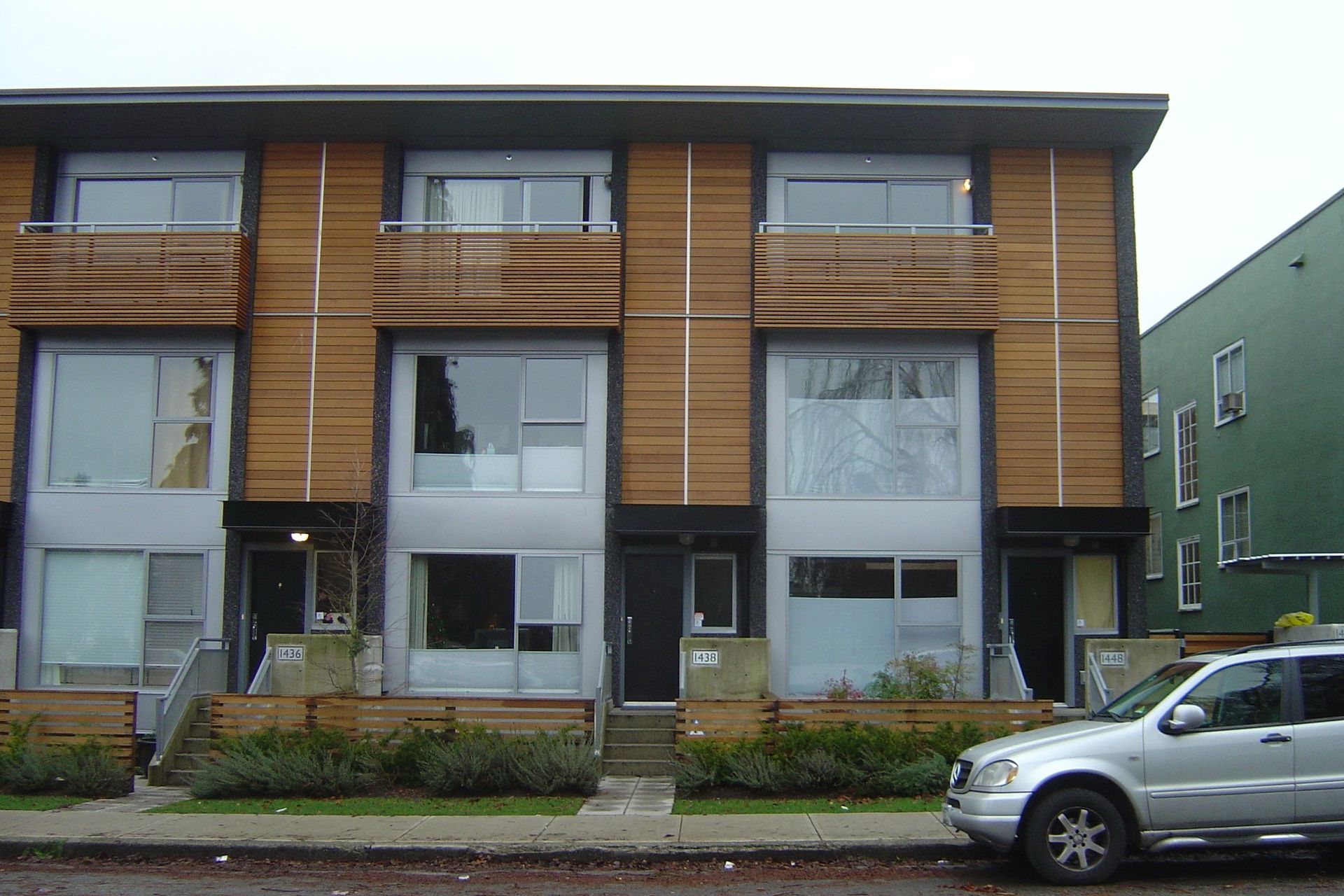
Test the layout with daily tasks
Walk from the garage to the kitchen with groceries in mind.
- Check the stairs between bedrooms, laundry and living areas.
- Measure garage clearance and furniture access.
More on test the layout with daily tasks
See how easily you can reach the outdoor space.

Find out who maintains what
An individual front door does not remove shared responsibilities.
- Ask who handles roofs, windows, decks and fences.
- Review parking, pets and alteration rules in the strata records.
More on find out who maintains what
Confirm which repairs and costs would fall to you.

The basics
A house-like home with shared rules
Most townhouses in Metro Vancouver and the Fraser Valley are strata properties. You have your own front door and often a garage, but the roof, siding, windows and fences may be looked after by the strata corporation. You also follow its bylaws and help pay for shared repairs.
A townhouse viewing has two jobs. One is testing whether the layout, stairs and garage fit your daily life. The other is working out who repairs what, so there are no surprises when a deck rots or a roof wears out.
Why it matters
Why the who-repairs-what question matters
Under BC’s Standard Bylaws, the strata repairs things like the structure, exterior, outside doors and windows, balconies, and fences around patios. Many stratas have their own bylaws that change this. If yours puts more on owners, your budget needs room for it.
Bare land stratas are different again. The government notes that Standard Bylaws do not make the strata maintain the homes there, so owners carry those costs.
How it works
Walking a townhouse properly
Count the stairs
Go from garage to kitchen to bedroom to laundry. Note how many flights you climb for each trip and whether that works now and in five years.
Measure the garage
Check width, depth and door height against your vehicle. Look for a tandem layout, where one car parks behind the other.
Inspect the outdoor space
Check the yard or patio surface, drainage, fences and privacy. Ask whether it is part of your strata lot or limited common property.
Look at roofs, siding and windows
From outside, note visible wear. These are often strata items, so link anything you see to the depreciation report and minutes.
Check the complex
Walk the internal roads, visitor parking and garbage area. Signs of upkeep there say something about how the strata spends money.
Ask for the alteration history
Find out whether earlier owners changed decks, windows or fences, and whether an alteration agreement makes the owner responsible for future repairs.
Avoid these
Townhouse traps
Treating it like a detached house
You cannot always add a deck, change windows or fence the yard as you wish. Approval and bylaws apply.
Missing an alteration agreement
A previous owner’s approved change may come with an agreement that you take on its future upkeep. Ask whether one exists for this unit.
Overlooking a tandem garage
Two-car tandem parking means constant shuffling. Make sure it suits your household before you count it as two spaces.
Ignoring complex age
Several buildings of the same age may need roofs or siding at the same time. Check how the depreciation report plans for that.
Questions to ask
Questions that clear things up
The strata or property manager
- Under your bylaws, who repairs the roof, decks, fences and windows for this unit?
- Is there an alteration agreement on file for this strata lot?
- When was the exterior last renewed, and what is planned next?
- Is this a bare land strata?
Your home inspector
- Can you check the garage, attic access and exterior of this unit?
- Do you see drainage or deck issues worth raising with the strata?
- Which items here would likely be strata responsibilities?
Your lawyer or notary
- Does the strata plan show the yard as part of my lot or as limited common property?
- Do the bylaws change the Standard Bylaws on repairs?
- Are any legal proceedings disclosed on the Form B?
FAQ
Common questions
Is every townhouse a strata?
No, but many are. Freehold row homes and leasehold arrangements exist too. Our guide to freehold vs leasehold strata explains the differences in ownership.
Who fixes the roof on a townhouse?
It depends on the bylaws and the type of strata. In a regular strata following Standard Bylaws, the strata repairs the exterior and roof. In a bare land strata, owners usually carry those costs.
Can I build a deck or change my fence?
Usually you need the strata’s written approval first, and the city may need a permit too. Approval can come with an agreement making you responsible for future upkeep.
Do townhouses have depreciation reports?
If the strata has five or more lots, the BC government requires a depreciation report on a five-year cycle. Ask for the most recent one with the Form B.
A practical example
Walk the route with a task in mind
Choose one everyday task, such as arriving with groceries, and follow its whole route.
- Repeat for laundry, outdoor access and leaving with equipment.
- Notice where you would need to use stairs or move through narrow spaces.
Compare the result across homes before deciding that an extra room makes one layout more useful.
A detail to keep in mind
A garage used for storage may no longer work as the parking space your household needs.
Official information
Start with these resources, then confirm the details for your property and circumstances.
BC: strata documents for buyers and sellersGovernment of BC: Paying for repair and maintenance in stratasGovernment of BC: Strata depreciation report requirementsGovernment of BC: Strata parking stalls and storage lockersReference review: October 6, 2026